Our planet is a repository of wonders, many of which are well-understood and cataloged by science. Yet, in the deep oceans, remote forests, and frozen continents, there exist phenomena that defy easy explanation. These natural anomalies challenge our understanding of geology, biology, and physics, sparking debate and inspiring awe. They are puzzles etched into the landscape, inviting us to look closer and question what we think we know. This guide provides an in-depth exploration of three of the most captivating and controversial mysteries: a strange object lying on the Baltic seabed, a forest of inexplicably twisted trees in Siberia, and a glacier in Antarctica that appears to bleed. Each case study represents a unique intersection of scientific inquiry, wild speculation, and the enduring power of the unknown.
The Baltic Sea Anomaly: A Sunken UFO or Natural Rock?
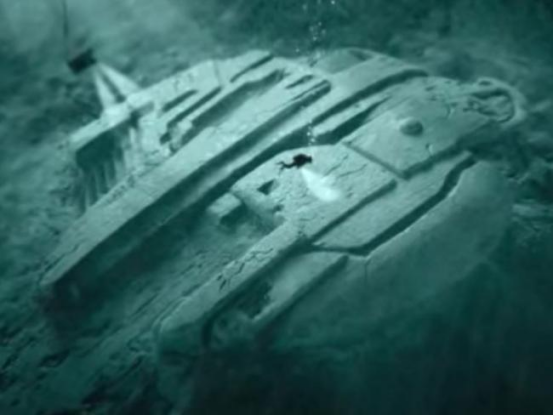
In the murky depths of the Baltic Sea lies an object that has fueled intense debate since its discovery. Dubbed the Baltic Sea Anomaly, its unusual shape and the strange circumstances surrounding it have made it a focal point for researchers, treasure hunters, and conspiracy theorists alike. The central question remains: is it a unique geological formation, a long-lost historical artifact, or something else entirely?
The Discovery by the Ocean X Team
The story began in June 2011 when the Swedish-based “Ocean X Team,” a group of oceanographers and treasure hunters, was surveying the floor of the Baltic Sea between Sweden and Finland. Using side-scan sonar, they captured a striking image of a large, circular object resting on the seabed at a depth of approximately 90 meters (300 feet). The initial sonar readings depicted a perfectly round object, about 60 meters (200 feet) in diameter, with features that appeared strikingly unnatural, including what looked like ramps, stairways, and straight edges. Adding to the mystery, the sonar showed a long, flattened track leading to the object, suggesting it may have skidded across the seabed before coming to a rest.
Analyzing the Anomaly’s Peculiar Features
Subsequent expeditions by the Ocean X Team provided more data but few definitive answers. Divers who approached the anomaly reported that their electronic equipment, including satellite phones and some cameras, mysteriously failed when directly above the object, only to function normally once they moved away. This reported electronic interference has become a cornerstone of more exotic theories. Samples recovered from the object’s surface were analyzed by geologists. While some initial reports claimed the material was not native to the area, later analysis by Volker Brüchert, a geologist at Stockholm University, concluded that the samples were pieces of basaltic rock, a type of volcanic rock not uncommon in glacial deposits. The structure itself is described as having a “rough and rugged” surface, with a texture akin to granite.
Competing Theories: From Glacial Deposits to Alien Tech
The lack of clear evidence has allowed a wide range of theories to flourish, each attempting to explain the anomaly’s origin.
- Natural Geological Formation: This is the most widely accepted scientific explanation. Geologists suggest the anomaly is likely a glacial deposit known as a “pillow basalt” or a similar rock formation dropped by retreating glaciers during the Ice Age. The circular shape, while unusual, is not impossible in nature.
- Man-Made Historical Artifact: Another prominent theory is that the object is a relic from human history. Suggestions range from the base of a Nazi anti-submarine weapon from World War II to a lost piece of a battleship turret or even an ancient stone structure.
- Extraterrestrial Origin: The most sensational theory posits that the anomaly is a crashed unidentified flying object (UFO). Proponents point to its symmetrical, disc-like shape and the reported electronic disturbances as evidence that it is a piece of non-human technology, often comparing its appearance to the Millennium Falcon from Star Wars.
The Scientific Stalemate and Lingering Mystery
Today, the Baltic Sea Anomaly remains largely unexplained. The high cost of deep-sea expeditions and the murky, low-visibility conditions of the Baltic Sea have prevented more comprehensive research. Without a well-funded, large-scale scientific mission to drill into the object or excavate around it, its true nature is likely to remain a subject of speculation. It stands as a powerful reminder of how much of our own planet’s oceans remain unexplored.

Siberia’s Dancing Forest: Nature’s Twisted Sculpture Garden
Located on the Curonian Spit, a narrow, sandy peninsula separating the Curonian Lagoon from the Baltic Sea coast, lies a peculiar pine forest that seems to defy the laws of nature. Known as the Dancing Forest (or Drunken Forest), its trees are contorted into bizarre spirals, loops, and rings, creating an otherworldly landscape that has puzzled scientists and enchanted visitors for decades.
The Enigmatic Landscape of the Curonian Spit
The trees in question were planted in the early 1960s to help stabilize the coastal dunes of the Curonian Spit, a UNESCO World Heritage Site shared by Russia and Lithuania. While most of the forest grows normally, one specific, small area contains dozens of pine trees that have grown in these strange, twisted shapes. The trunks bend and curve near the ground before straightening out and growing upwards, as if they were forced to navigate an invisible obstacle in their youth. This localized nature of the phenomenon makes it all the more mysterious.
Scientific Explanations: Wind, Soil, and Pests
Scientists have proposed several naturalistic explanations for the trees’ unusual growth patterns, though no single theory has been universally accepted. These explanations focus on environmental factors that could have influenced the saplings during their critical early growth stages.
- Geomorphological Factors: One leading theory suggests a combination of strong, consistent winds blowing from the sea and the unstable, sandy soil of the dunes. This combination could have caused the young, flexible saplings to bend and rotate as they grew, eventually solidifying into their twisted forms.
- Caterpillar Infestation: A highly plausible biological explanation involves the pine shoot moth (*Rhyacionia buoliana*). The larvae of this moth damage the apical buds (the primary growing tips) of young pine trees. When the main shoot is destroyed, the tree is forced to continue its growth from a lateral (side) bud. This can result in a curved or forked trunk, and repeated infestations over several years could potentially create the complex shapes seen in the forest.
The Allure of Supernatural and Geomagnetic Theories
Where scientific consensus is lacking, folklore and speculation often take root. The Dancing Forest is no exception, with local legends and new-age theories offering more mystical explanations. Some locals believe the area is a place of immense spiritual power or a gateway between worlds. Another popular speculative theory is that the forest sits on a site of a unique geomagnetic anomaly, where conflicting energy fields have warped the trees’ growth. While there is no scientific evidence to support this, the idea adds to the forest’s enigmatic charm.
A Living Puzzle and Tourist Phenomenon
The Dancing Forest has become a significant tourist attraction in Russia’s Kaliningrad Oblast. Visitors flock to walk among the contorted pines, with many believing that climbing through one of the tree rings will grant a wish or add a year to their life. This very popularity has led to concerns about the forest’s preservation, as foot traffic erodes the fragile soil around the trees. The forest remains a living puzzle—a testament to nature’s ability to create art that is as beautiful as it is baffling.

Antarctica’s Blood Falls: A Glimpse into an Alien World
In one of the most inhospitable places on Earth, the McMurdo Dry Valleys of Antarctica, a shocking splash of deep red color stains the pristine white ice of the Taylor Glacier. This phenomenon, known as Blood Falls, is a five-story-tall cascade of crimson brine that seeps from the glacier’s tongue. For over a century, its origin was a profound mystery, but modern science has unraveled its secrets, revealing an ancient, hidden world that has profound implications for the search for life beyond Earth.
The Startling Discovery by Griffith Taylor
Blood Falls was first documented in 1911 by the Australian geologist Griffith Taylor during one of Robert Falcon Scott’s Antarctic expeditions. Initially, Taylor and his team hypothesized that the red color was caused by a species of red algae. This explanation was accepted for decades, but it failed to account for why the water flowed from a glacier in a region where average temperatures are far below freezing.
The Geochemical Secret Behind the Crimson Cascade
The true cause of the red color is far more fascinating. The source of Blood Falls is a subglacial lake that has been trapped beneath the Taylor Glacier for at least 1.5 million years. This trapped body of water is completely cut off from the atmosphere and sunlight. Over millennia, as glaciers scraped over the bedrock, they churned large amounts of iron into the water. The lake is therefore an anoxic (oxygen-free) brine that is incredibly rich in dissolved ferrous iron. Periodically, the pressure of the overlying glacier forces some of this water out through a fissure. When the iron-rich water reaches the surface and makes contact with oxygen in the air for the first time, the iron oxidizes—it essentially rusts. This chemical reaction turns the water its distinctive, blood-red color as it flows onto the ice.
A Subglacial Ecosystem Thriving in Isolation
Perhaps the most groundbreaking discovery about Blood Falls is that its source lake is not sterile. It hosts a unique and robust microbial ecosystem that has evolved in complete isolation, without light or oxygen. These microbes survive through a process called chemosynthesis, metabolizing the sulfur and iron compounds in the brine for energy. They represent a form of life that can exist in conditions previously thought to be uninhabitable. This discovery proved that life can thrive in extremely cold, dark, and anoxic environments, fundamentally expanding our definition of where life can be found.
Implications for Astrobiology and the Search for Life
The ecosystem of Blood Falls serves as a remarkable terrestrial analog for potential life on other celestial bodies. Astrobiologists are particularly interested because the conditions—a liquid water ocean trapped beneath a thick ice shell—are similar to what is believed to exist on Jupiter’s moon Europa and Saturn’s moon Enceladus. The fact that a complex microbial community can sustain itself for millions of years in these conditions on Earth strongly suggests that similar life could exist in the sub-surface oceans of these icy moons, or even beneath the polar ice caps of Mars. Blood Falls is no longer just a geological curiosity; it is a window into how life might survive in the most extreme corners of our solar system.
Commonalities and Contrasts in Earth’s Enigmas
While these three mysteries originate from vastly different environments, they share common threads that highlight our relationship with the unknown. They each represent a point where our current scientific models are challenged, forcing us to either find new data or re-evaluate existing theories. From the deep sea to the frozen desert, these anomalies push the boundaries of exploration and human understanding.
The Role of Technology in Discovery and Investigation
Each of these discoveries was made possible by technology. The Baltic Sea Anomaly was invisible until the advent of high-resolution side-scan sonar. The secrets of Blood Falls were unlocked through advanced geochemical analysis and radar surveys that could map the subglacial plumbing. Technology is both the source of these mysteries and our best hope for solving them. However, as seen with the anomaly, it can also provide ambiguous data that deepens the puzzle rather than solving it.
The Intersection of Science, Speculation, and Folklore
Where scientific evidence is incomplete or difficult to obtain, human imagination fills the void. The Baltic Sea Anomaly’s disc shape immediately invites UFO comparisons, while the Dancing Forest’s eerie beauty lends itself to tales of spirits and energy fields. These speculative and folkloric narratives are not just flights of fancy; they are a fundamental part of how we process and engage with things we do not understand. They add a rich cultural layer to these natural phenomena, transforming them from mere scientific curiosities into powerful symbols of mystery.
Why These Mysteries Endure in the Modern Age
In an age of satellite imagery and instant information, it is easy to assume that every corner of our world has been mapped and explained. The enduring nature of these enigmas proves otherwise. They serve as a humbling reminder that Earth still holds profound secrets. The quest to understand them is not just about finding answers; it is about the thrill of the chase, the drive to explore the unknown, and the possibility that the next discovery could once again change everything we thought we knew about our own planet.
Frequently Asked Questions (FAQ)
- Has the Baltic Sea Anomaly ever been definitively identified?
- No, the Baltic Sea Anomaly has not been definitively identified. While the prevailing scientific theory suggests it is a natural glacial rock deposit, the high cost of further investigation and the conflicting data, such as reported electronic interference, have prevented a conclusive identification. It remains a subject of intense debate and speculation.
- What is the most accepted scientific theory for the Dancing Forest?
- The most widely accepted scientific theories point to environmental factors affecting the trees during their early growth. The two leading explanations are a combination of strong, persistent winds and unstable sandy soil, and an infestation of the pine shoot moth caterpillar (*Rhyacionia buoliana*), which damages the main growing shoot and forces the tree to grow from a side bud, causing the initial curve.
- Is the water from Blood Falls actually blood?
- No, the water is not blood. It is an extremely salty brine that is highly concentrated with dissolved iron. The water’s source is a subglacial lake deprived of oxygen. When this iron-rich water flows out and is exposed to oxygen in the atmosphere, the iron oxidizes (rusts), which stains the water a deep crimson color, giving it the appearance of blood.
- Could life exist on other planets in conditions similar to Blood Falls?
- Yes, and this is what makes Blood Falls so significant to astrobiologists. The discovery of a thriving microbial ecosystem in a dark, cold, oxygen-free environment beneath a glacier on Earth provides a strong “proof of concept” that life could exist in similar conditions elsewhere in the solar system, such as in the subsurface oceans of moons like Europa or Enceladus.