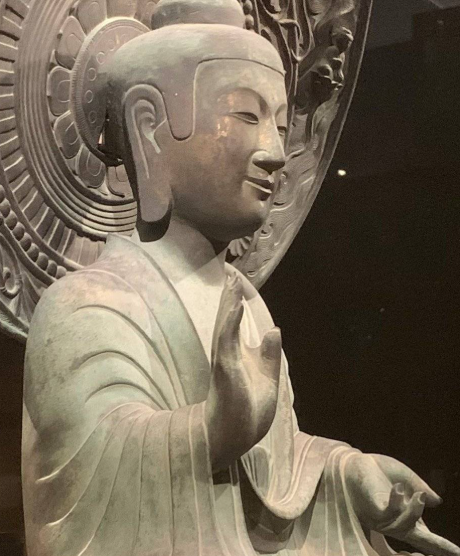
If you set foot in Nara, Japan, especially its well-preserved temple complexes, you’ll be enveloped by a tranquil aura—the gaze and warmth of ancient Buddha statues.
Despite spanning millennia, the statues from the Nara period (710–794) still captivate visitors and art enthusiasts with their gestures, expressions, and craftsmanship.
Background of the Creation of Buddhist Statues in the Nara Period
The Nara period marked the beginning of the establishment of centralized government in Japanese history and the widespread spread of Buddhism .
Japan absorbed a wealth of cultural, religious, and artistic elements from China’s Tang Dynasty, and Buddhism began to permeate both civilian and imperial life.
Buddhist statues from the Nara period were primarily used for temple worship and religious ceremonies. They were often carved from wood, covered in gold leaf, bronze, or stone , with wood carving being the most prominent.
These statues were not only religious symbols but also embodied the political, cultural, and aesthetic ideals of the time.
With the support of the imperial court and temples, Buddhist sculpture became a platform for the world’s leading artisans to showcase their skills and a symbol of the people’s devout faith.
Artistic characteristics of Buddha statues
Nara-period Buddha statues have several notable artistic features:
Dignified and Serene Expressions
Compared to earlier Buddha statues, Nara statues display calmer, more restrained facial expressions. Their eyes are often partially closed or gazing forward, giving viewers a sense of inner peace and spiritual comfort.
Proportions Following the Golden Ratio
Whether seated, standing, or depicting a Bodhisattva, artisans strictly adhered to human proportions and the golden ratio, making the statues visually harmonious, stable, and dignified.
Graceful and Natural Drapery
The folds of the robes, long skirts, or shawls are carved with attention to flow, creating a sense of strength within softness and movement within stillness.
Integration of Material and Craftsmanship
Wooden statues are often coated with lacquer and gold leaf, while bronze or stone statues are polished smooth; some are inlaid with gems or painted, allowing them to radiate a mysterious and majestic glow under the light.
This artistic approach not only demonstrates the exceptional skills of Nara-period artisans but also gives the statues a powerful visual and spiritual impact.
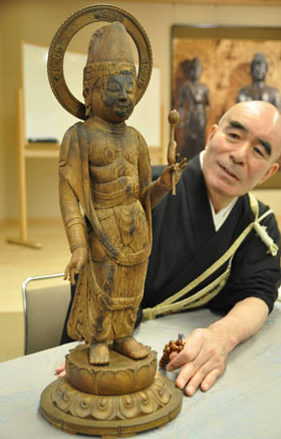
The power of silence
The beauty of Buddha statues lies not only in their external form, but also in the silent power they bring .
Standing in front of the Buddha statue, you will feel that the flow of time has almost stopped:
Every wrinkle of the clothes tells the story of the hard work of the craftsmen thousands of years ago;
Every time the eyes gaze, it is like a silent dialogue with the viewer;
The posture of each Buddha statue conveys faith and compassion.
This silent power inspires awe and makes the Nara Buddha statues a haven for the soul.
Whether it is the monks in the temple or tourists from afar, they can all find a moment of peace and spiritual comfort in the Buddha statues.
The Interweaving of Buddhism and Politics
Nara Buddha statues are not only religious works of art, but also carry political symbols.
The Nara period marked the gradual consolidation of centralized power in Japan. The imperial family used temples and Buddhist statues to demonstrate its authority and political ideals.
Many large Buddhist statues, such as the Great Buddha at Todai-ji Temple, served not only as religious centers but also as symbols of national power .
The artisans who carved these statues balanced artistic expression with the aesthetics of the imperial court, resulting in Nara’s Buddhist statues imbued with both spirituality and a grand and solemn political aura.
Preservation and Modern Research
Thousands of years have passed, and the preservation of Nara Buddha statues to this day is inseparable from the careful maintenance and restoration of the temples .
In modern research, scholars have conducted systematic research on the materials, pigments, and restoration history of Buddha statues through high-precision scanning, 3D modeling, and chemical analysis techniques:
It was discovered that some of the wooden Buddha statues originally used multiple layers of gold leaf and natural pigments;
The carving techniques of the folds of clothing and postures show the craftsman’s strict proportion calculation and aesthetic rules;
By comparing Buddha statues from different temples, scholars can trace the artisan schools and the time of their creation.
These modern technologies have made Buddha statues not only objects of faith, but also important resources for art research and historical education .
Cultural and educational value
The value of Nara-period Buddha statues lies not only in religion or art, but also in their cultural and educational significance:
Cultural Heritage Across Time
These statues allow modern people to experience the aesthetics, beliefs, and social atmosphere of the Nara period.
A Model for Art Education
Students and art enthusiasts can study the statues to learn carving techniques, proportion design, and the handling of light and shadow.
Spiritual and Emotional Comfort
The silent power of the statues provides a source of spiritual support for people living in today’s fast-paced world.
Therefore, Nara Buddha statues are not only the culmination of ancient craftsmanship, but also an important component of contemporary cultural and educational practice.
Inspirations from modern life
Standing before a Nara-period Buddha statue, we are not merely looking at a sculpture; we are experiencing a collision of a thousand years of faith and craftsmanship.
Respect History and Culture
The Buddha statue reminds us that historical civilizations are worth understanding and preserving.
Feel the Power of Silence
Amid the hustle and bustle of modern life, we can, like when facing the statue, find inner peace.
Combine Aesthetics and Craftsmanship
The ancients’ attention to proportion, lines, and materials inspires us to pursue detail and quality in our modern lives.
Through its quiet presence, the Nara Buddha teaches us that beauty and faith, art and culture, can transcend time and become a shared spiritual treasure for humanity.
Summary : Buddha’s Light for a Thousand Years
Buddhist statues from the Nara period are a fusion of history, art, and faith .
Standing quietly for millennia, they tell us stories of that period with their dignified features, graceful draperies, exquisite proportions, and mysterious aura.
Whether you’re an art enthusiast, a historian, or just a casual tourist, standing before the Buddha statue will evoke a silent dialogue across time and space .
With its thousand-year legacy, the Nara Buddha statue represents not only the pinnacle of sculpture but also a precious spiritual legacy of human civilization.
Next time you step into a temple, you might as well stop and gaze at the thousand-year-old Buddha statue, and feel its silent wisdom and warmth.