Southeast Asia is a region steeped in a profound and multifaceted history, characterized by the rise and fall of powerful kingdoms and empires that left indelible marks on its cultural, political, and economic landscape. From the grand riverine cities of mainland Southeast Asia to the vibrant maritime states of the archipelago, these ancient civilizations were centers of innovation, trade, and spiritual devotion. Understanding their origins, peak periods, and eventual transformations is crucial to appreciating the contemporary diversity and resilience of the region. This pillar page offers an exhaustive exploration into some of the most prominent of these historical entities, including the magnificent Ayutthaya Kingdom of Thailand, the culturally unique Yogyakarta Sultanate in Indonesia, and the ancient, often overlooked, Langkasuka Kingdom of the Malay Peninsula.
Introduction to Southeast Asia’s Ancient Empires
The historical narrative of Southeast Asia is far from monolithic; it is a rich tapestry woven from diverse threads of indigenous beliefs, Indian cultural influences (Hinduism and Buddhism), and later, Islamic and European impacts. These interactions fostered unique sociopolitical structures, artistic expressions, and economic networks that propelled various kingdoms to regional dominance. Examining these empires reveals not only their individual grandeur but also the complex interconnections and shared heritage that bind the region. From powerful thalassocracies controlling vital trade routes to agrarian kingdoms building monumental temple complexes, each empire contributed distinct characteristics to the regional mosaic.
The Cradle of Civilization in Southeast Asia
Early settlements in Southeast Asia date back millennia, evolving from small agricultural communities into sophisticated state-level societies. The fertile river valleys and strategic maritime choke points provided ideal conditions for the emergence of powerful polities. These early states, often influenced by Indian religious and political concepts, developed their own distinct interpretations, leading to unique forms of governance and cultural synthesis. The adoption of writing systems, religious doctrines, and architectural styles from India was not a mere imitation but a creative adaptation that infused local traditions with new vigor.
- Early Influences: Indianization played a pivotal role, introducing concepts of kingship, Sanskrit, and major religions like Hinduism and Buddhism, which were localized and integrated into existing belief systems.
- Strategic Geography: The region’s location at the crossroads of major trade routes between India and China fostered the growth of wealthy maritime empires.
- Resource Richness: Abundant natural resources, including spices, timber, and precious metals, fueled economic prosperity and attracted foreign traders, further enriching these kingdoms.
The Majestic Ayutthaya Kingdom: Thailand’s Former Glory
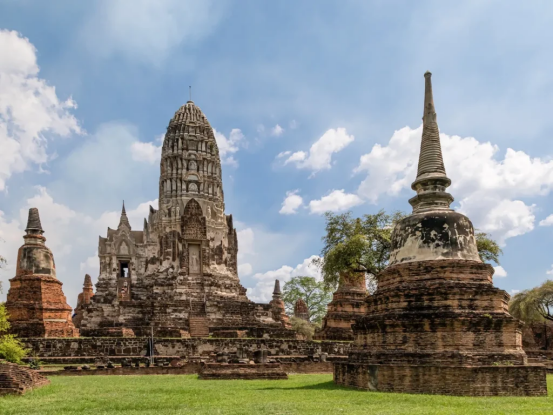
The Ayutthaya Kingdom, founded in 1351 by King Uthong (Ramathibodi I), rose to become one of the most powerful and prosperous empires in Southeast Asian history. Situated on an island at the confluence of three rivers – the Chao Phraya, Pa Sak, and Lopburi – its strategic location made it an impenetrable fortress and a vibrant hub for international trade. For over 400 years, Ayutthaya served as the capital of Siam, characterized by its impressive architecture, sophisticated administration, and extensive diplomatic and commercial ties with nations across Asia and Europe.
Founding and Golden Age of Ayutthaya
The establishment of Ayutthaya marked a significant shift in Siamese political power, moving south from Sukhothai. The kingdom rapidly expanded its influence, consolidating control over much of present-day Thailand and parts of neighboring territories. Its golden age, particularly during the 17th century, saw unprecedented prosperity, cultural flourishing, and military strength. The city itself was a cosmopolitan metropolis, home to a diverse population of traders, missionaries, and artisans from various nations, each contributing to its unique character.
- Strategic Location: Its island setting provided natural defenses and excellent access to maritime trade routes, attracting merchants from China, Japan, India, Persia, and Europe.
- Cosmopolitan Center: Ayutthaya was a melting pot of cultures, with distinct foreign quarters and a tolerant approach to various religions, fostering a dynamic intellectual and commercial environment.
- Architectural Grandeur: The city was adorned with magnificent temples, palaces, and statues, reflecting the kingdom’s wealth and artistic prowess, many of which are now UNESCO World Heritage Sites.
Political Structure and Economic Prowess
Ayutthaya’s political system was a highly centralized monarchy, with the king at its apex, considered a divine ruler (Devaraja). Below the king, a complex bureaucratic hierarchy governed the kingdom, managing everything from tax collection to military affairs. The kingdom’s economy was primarily agrarian, relying on rice cultivation, but international trade played an equally critical role. Ayutthaya’s control over the lucrative spice and timber trade routes, combined with its own manufactured goods, made it a formidable economic power in the region.
Specific examples of Ayutthayan economic activities include:
- Rice Production: The fertile plains of the Chao Phraya River basin made Ayutthaya a major rice exporter.
- Forest Products: Timber, particularly teak, and various resins and medicinal plants were valuable exports.
- Crafts: High-quality ceramics, textiles, and metalwork were produced and traded.
- Trade Networks: Established trade relations with Japan (through Red Seal ships), China (tribute system), Persia, and European powers like the Dutch and French.
Decline and Fall of Ayutthaya
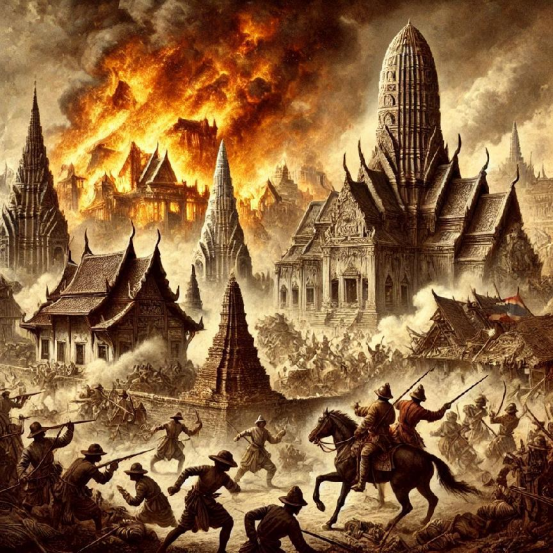
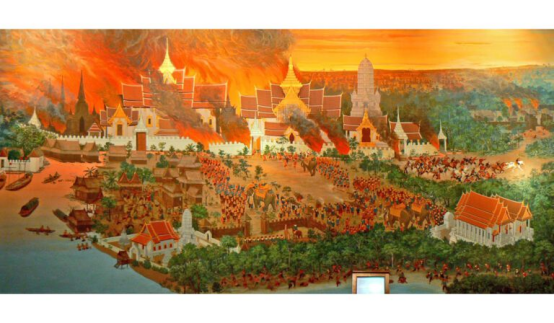
Despite its long period of prosperity, Ayutthaya eventually faced internal strife and external pressures. Dynastic disputes, weakened central authority, and escalating conflicts with neighboring Burma (Myanmar) led to its ultimate demise. The Burmese-Siamese wars were particularly devastating, culminating in the complete destruction of the capital city in 1767. This catastrophic event marked the end of the Ayutthaya Kingdom, though its legacy profoundly shaped the subsequent Thonburi and Rattanakosin (Bangkok) periods of Thai history.
Key factors contributing to the decline:
- Succession Disputes: Frequent struggles for the throne often destabilized the kingdom and diverted resources.
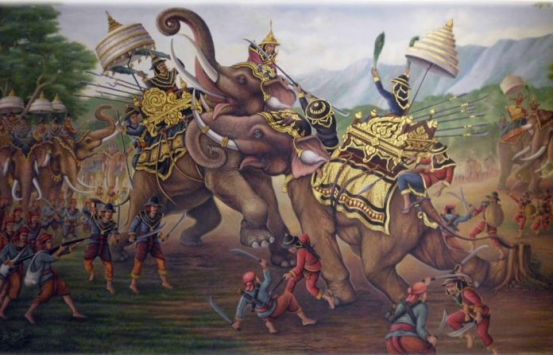
- Burmese Invasions: Repeated and increasingly successful invasions by the Konbaung Dynasty of Burma severely weakened Ayutthaya’s military and economy.
- Loss of Trade Dominance: Changes in global trade routes and the rise of European colonial powers gradually eroded Ayutthaya’s commercial advantages.
The Unique Yogyakarta Sultanate: Indonesia’s Cultural Heart
In contrast to the ancient, fallen empire of Ayutthaya, the Yogyakarta Sultanate stands as a remarkable example of a traditional Javanese kingdom that has not only survived but thrived into the modern era. Established in 1755, following the partition of the Mataram Sultanate, Yogyakarta (often referred to as Ngayogyakarta Hadiningrat) maintains a unique status within the Republic of Indonesia as a special region with its own hereditary ruler, the Sultan, who also serves as the provincial governor. This dual role underscores its profound cultural significance and political autonomy, making it a living symbol of Javanese heritage.
Origins and Enduring Autonomy
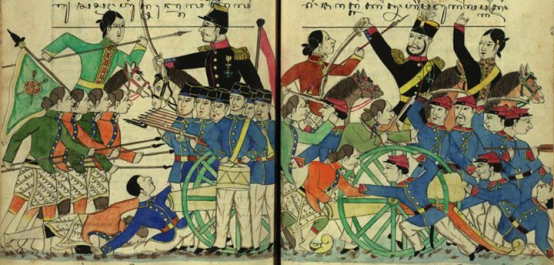
The Sultanate’s foundation was a result of the Treaty of Giyanti, which divided the Mataram Sultanate into two: Yogyakarta and Surakarta. This division was orchestrated by the Dutch East India Company (VOC) in an attempt to weaken local power. However, Yogyakarta quickly established its own distinct identity, becoming a bastion of Javanese culture and a center of resistance against colonial rule. Its enduring autonomy was cemented during Indonesia’s struggle for independence, when Sultan Hamengkubuwono IX played a crucial role in supporting the nascent republic, leading to its special administrative status.
- Treaty of Giyanti (1755): The seminal event that formally established the Sultanate of Yogyakarta.
- Anti-Colonial Resistance: Yogyakarta became a focal point for Indonesian nationalism and a safe haven for republican leaders during the revolution.
- Special Region Status: Its unique administrative status within Indonesia acknowledges its historical contributions and preserves its traditional governance.
Cultural Preservation and Royal Traditions
Yogyakarta is widely recognized as the cultural heart of Java, a place where traditional arts, customs, and philosophies are meticulously preserved and actively practiced. The Kraton (Sultan’s Palace) is not merely a historical monument but a living palace, functioning as the center of royal life, cultural ceremonies, and administrative duties. The Sultanate’s commitment to preserving Javanese heritage is evident in its support for traditional performing arts, such as Wayang Kulit (shadow puppetry), Gamelan music, and classical dance forms, as well as its unique batik craftsmanship.
The Sultanate’s commitment to culture is exemplified through:
- The Kraton: The primary cultural and spiritual center, hosting traditional ceremonies and housing royal heirlooms.
- Performing Arts: Patronage of Gamelan orchestras, Wayang Kulit performances, and various Javanese classical dances.
- Batik Art: Yogyakarta is a renowned center for high-quality batik, with distinct styles and motifs passed down through generations.
- Javanese Language and Philosophy: The Sultanate actively promotes the use and study of the Javanese language and its intricate philosophical underpinnings.
Modern Relevance and Challenges
Today, the Yogyakarta Sultanate navigates the complexities of modernity while steadfastly holding onto its traditions. The Sultan’s dual role as both traditional ruler and elected governor presents a unique model of governance, blending heritage with contemporary democratic principles. The region faces challenges such as urbanization, environmental concerns, and the need for economic development, yet its cultural vibrancy continues to attract tourists and scholars alike, ensuring its continued relevance on both national and international stages.
Statistical insights into Yogyakarta’s modern context:
| Aspect | Detail/Impact |
|---|---|
| Tourism Sector | Attracts millions of domestic and international tourists annually, drawn by cultural sites like Borobudur, Prambanan, and the Kraton. |
| Education Hub | Home to numerous universities, including Gadjah Mada University, making it a key intellectual center in Indonesia. |
| Economic Contribution | Its cultural and tourism sectors significantly contribute to the regional GDP, alongside agriculture and small industries. |
| Population Growth | Experiences steady population growth, leading to urban development pressures and infrastructure demands. |
Langkasuka Kingdom: Unveiling the Ancient Malay Maritime Power
The Langkasuka Kingdom, an ancient Malay Hindu-Buddhist kingdom, remains one of the more enigmatic and less extensively documented empires of Southeast Asia. Flourishing from the 2nd to the 15th centuries CE, it was strategically located on the Malay Peninsula, likely in the modern-day Kedah or Pattani region. Langkasuka played a crucial role in the early maritime trade networks between India, China, and the Malay Archipelago, serving as a significant port-of-call and a center for cultural exchange. Its history, pieced together from fragmented Chinese, Indian, and Arabic texts, along with archaeological findings, reveals a sophisticated state that predates many better-known regional powers.
Early Mentions and Geographical Extent
The earliest known references to Langkasuka appear in 5th-century Chinese historical texts, describing it as a powerful kingdom. Its strategic position on the Isthmus of Kra allowed it to control a vital trans-peninsular trade route, bypassing the longer journey around the southern tip of the Malay Peninsula. This geographical advantage was a cornerstone of its economic power and political influence. While its exact capital city remains debated among historians and archaeologists, the region of Pattani in southern Thailand is a strong candidate, supported by various archaeological discoveries.
- Chinese Records: Mentioned in texts like the Book of Liang (502-557 CE) and the New Book of Tang (7th-10th century CE), providing invaluable early accounts.
- Trans-Peninsular Route: Controlled a crucial land bridge for trade, enabling faster and safer passage for goods between the Indian Ocean and the South China Sea.
- Archaeological Evidence: Discoveries of ancient pottery, beads, and religious artifacts in areas like Pattani confirm early settlements and trade activities.
Cultural and Religious Synthesis
Langkasuka, like many early Southeast Asian kingdoms, was deeply influenced by Indian culture, adopting Hinduism and Buddhism as its primary religions. Evidence suggests a strong prevalence of Mahayana Buddhism, with numerous stupas and religious artifacts found in the region. This cultural synthesis was not merely an import but a dynamic process where Indian religious and artistic traditions blended with indigenous Malay beliefs, creating a unique Langkasukan identity. The kingdom served as a conduit for these cultural and religious ideas, spreading them further into the archipelago.
Specific cultural aspects include:
- Hindu-Buddhist Traditions: Adherence to both religions, often coexisting, reflecting the syncretic nature of early Malay beliefs.
- Artistic Styles: Production of sculptures and architectural elements that show a distinct blend of Indian and local artistic motifs.
- Sanskrit Inscriptions: Use of Sanskrit in official decrees and religious texts, indicating significant Indian linguistic influence.
Decline and Legacy of Langkasuka
The decline of Langkasuka is less clear than its rise. It likely faced competition from rising maritime powers like Srivijaya and later, Majapahit, which sought to control the same vital trade routes. Over time, the shift in trade patterns, coupled with the rise of Islam in the Malay world, gradually diminished Langkasuka’s influence. By the 15th century, it had largely faded from historical records, absorbed into larger Malay sultanates. Despite its eventual disappearance, Langkasuka’s legacy lies in its pioneering role in establishing early maritime trade and its contribution to the cultural and religious landscape of the Malay Peninsula, setting the stage for future Malay kingdoms.
- Competition from Srivijaya: The powerful maritime empire of Srivijaya likely overshadowed Langkasuka’s dominance in trade.
- Rise of Islam: The gradual Islamization of the Malay Peninsula led to the emergence of new sultanates with different cultural and political orientations.
- Archaeological Importance: Continued archaeological efforts are crucial for further uncovering the mysteries and contributions of this ancient kingdom.
Shared Legacies and Enduring Influence of Regional Empires
The histories of Ayutthaya, Yogyakarta, Langkasuka, and countless other kingdoms across Southeast Asia, while distinct in their specifics, share profound commonalities that underscore the region’s interconnected past. These empires were not isolated entities but integral parts of a dynamic regional and global network, constantly interacting through trade, diplomacy, and sometimes, conflict. Their rise and fall were often influenced by similar factors: strategic geography, resource control, cultural exchange, and the perennial challenges of governance and succession. The enduring legacies of these empires are visible today in the region’s diverse cultures, languages, religions, and even its political structures.
Cultural Synthesis and Identity Formation
One of the most significant shared legacies is the extraordinary capacity for cultural synthesis. Each kingdom, while drawing inspiration from external sources (primarily India, and later China and the Islamic world), managed to localize and transform these influences into uniquely Southeast Asian forms. This process of indigenization created rich cultural tapestries that continue to define national and regional identities. From architectural marvels like Borobudur and Angkor Wat to the intricate performing arts of Java and Thailand, these cultural expressions are direct descendants of imperial patronage and innovation.
- Religious Syncretism: The blending of indigenous animism with Hinduism, Buddhism, and Islam created unique spiritual practices and belief systems.
- Artistic Adaptation: Foreign artistic styles were reinterpreted to reflect local aesthetics and narratives, leading to distinctive regional art forms.
- Language Evolution: The development of local languages was often influenced by Sanskrit, Arabic, and Chinese, enriching vocabularies and literary traditions.
Economic Networks and Global Connections
The ancient empires of Southeast Asia were not merely regional players; they were crucial nodes in a vast pre-modern global economy. Their strategic location facilitated trade between the East and West, establishing sophisticated maritime and overland routes. The control over valuable commodities such as spices, gold, and exotic timbers fueled immense wealth and fostered cosmopolitan societies. This historical role as a global connector continues to shape Southeast Asia’s economic orientation and its importance in international commerce today.
Historical economic connections:
| Empire/Region | Key Trade Goods | Major Trade Partners |
|---|---|---|
| Ayutthaya Kingdom | Rice, timber, spices, ceramics | China, Japan, India, Persia, Europe (Dutch, French) |
| Langkasuka Kingdom | Spices, aromatic woods, gold, tin | India, China, Middle East |
| Malay Archipelagos | Spices (cloves, nutmeg), pepper, silk, porcelain | China, India, Arab traders, Europe (Portuguese, Spanish) |
Enduring Political and Social Structures
While empires rise and fall, certain foundational elements of governance and social organization often persist. The concept of a centralized state, the importance of a ruling elite, and the role of religious institutions in legitimizing power are threads that run through many of these historical narratives. Even in post-colonial independent nations, elements of these ancient political philosophies and social hierarchies can be observed, albeit in modernized forms. The unique case of the Yogyakarta Sultanate exemplifies this continuity, demonstrating how traditional structures can adapt and remain relevant in a contemporary nation-state.
- Monarchical Traditions: Many modern Southeast Asian nations retain constitutional monarchies or have historical respect for royal lineages.
- Bureaucratic Systems: The sophisticated administrative structures developed by ancient empires laid groundwork for later state administrations.
- Community Resilience: The social cohesion fostered within these historical polities contributed to the enduring strength of local communities.
Frequently Asked Questions (FAQ)
- Q1: What defines a “Pillar Page” in the context of ancient empires?
- A Pillar Page on ancient empires is a comprehensive, authoritative, and in-depth guide that covers a broad topic (e.g., “Ancient Southeast Asian Kingdoms”) and links out to more specific “cluster content” articles (e.g., individual articles on Ayutthaya, Langkasuka, etc.). It aims to be the ultimate resource for a particular subject, providing extensive detail, historical context, and interconnected narratives, rather than just a summary of facts.
- Q2: How did geography influence the rise and fall of these Southeast Asian kingdoms?
- Geography played a pivotal role. Kingdoms like Ayutthaya benefited from fertile river plains for agriculture and strategic riverine locations for defense and trade. Maritime empires like Langkasuka thrived by controlling vital sea lanes and trans-peninsular routes, enabling them to become wealthy trade hubs. Conversely, changes in trade routes or shifts in geopolitical control of these geographical advantages often contributed to their decline.
- Q3: What were the primary cultural influences on ancient Southeast Asian empires?
- The primary cultural influence was “Indianization,” which involved the transmission of Hindu and Buddhist religions, Sanskrit language, political concepts (like Devaraja), and artistic styles from India starting around the 1st century CE. Later, Islamic influences became prominent, particularly in the Malay Archipelago, and Chinese cultural and political models also played a role, especially in mainland Southeast Asia. These influences were always adapted and localized, resulting in unique indigenous cultures.
- Q4: How does the Yogyakarta Sultanate differ from other historical Southeast Asian kingdoms?
- The Yogyakarta Sultanate is unique because it is a traditional Javanese kingdom that has successfully maintained its cultural and political autonomy into the modern era. Unlike most other historical empires which collapsed or were fully integrated into modern states, Yogyakarta retains its hereditary ruler (the Sultan), who also serves as the provincial governor within the Republic of Indonesia. This dual role exemplifies a successful blend of traditional governance with contemporary democratic structures, making it a living cultural and political symbol.
- Q5: Why is Langkasuka considered an “enigmatic” ancient kingdom?
- Langkasuka is considered enigmatic because its history is primarily reconstructed from foreign accounts (Chinese, Indian, Arabic texts) and archaeological findings, rather than extensive indigenous records. Its exact geographical boundaries, the precise location of its capital, and the detailed narratives of its rulers and events remain subjects of ongoing academic debate and archaeological exploration. This scarcity of direct internal sources contributes to its mysterious allure.
Written By