China’s Enigmatic Underwater Pyramids: Sunken Cities and Ancient Structures
China, a land rich in ancient history and profound mysteries, holds secrets not only on its vast landmass but also beneath the tranquil surfaces of its lakes. The discovery of colossal underwater structures, often dubbed “pyramids” due to their impressive scale and geometric forms, has ignited fervent debate among archaeologists, historians, and enthusiasts. These submerged cities and architectural marvels suggest advanced ancient civilizations that vanished, leaving behind only tantalizing ruins. The sheer size and complexity of these sites challenge conventional timelines of human development in the region, prompting deeper investigation into their origins, purpose, and the cataclysmic events that led to their submersion.
Fuxian Lake: The Sunken City of Yuyuan
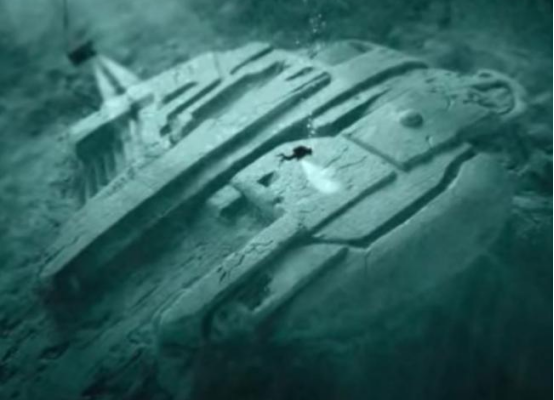
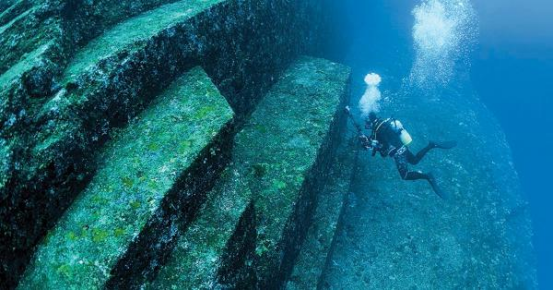
One of the most compelling examples lies within Fuxian Lake in Yunnan Province. Local fishermen have long reported strange structures beneath the waves, but it wasn’t until the early 2000s that systematic underwater archaeological expeditions began to uncover a sprawling complex. Sonar scans and diver explorations revealed massive stone buildings, paved roads, and even a pyramid-like structure rising from the lakebed. The largest pyramid, estimated to be over 100 feet tall, features intricate carvings and steps, suggesting a ceremonial or religious function. Pottery shards found at the site date back over 1,750 years, leading some experts to identify it as the lost city of Yuyuan, a significant settlement mentioned in historical texts that mysteriously disappeared. The precision of the stonework and the sheer scale of the ruins indicate a sophisticated society capable of monumental construction.
Qiandao Lake: The Lion City of Shicheng
Further east, in Zhejiang Province, Qiandao Lake (Thousand Island Lake) harbors another incredible underwater city: Shicheng, or “Lion City.” Unlike Fuxian Lake’s ancient mystery, Shicheng’s submersion is a known, albeit relatively recent, event. It was deliberately flooded in 1959 to create a reservoir for a hydroelectric power station. However, what makes Shicheng remarkable is its incredible state of preservation. Resting 85 to 130 feet beneath the surface, the city’s architecture remains largely intact, including grand archways, guardian lions, and intricately carved wooden beams. Built during the Eastern Han Dynasty (25-220 AD) and further developed during the Ming and Qing dynasties, Shicheng offers a unique window into a bygone era, frozen in time. Its preservation provides invaluable insights into ancient Chinese urban planning and architectural techniques, making it a “time capsule” for archaeologists and a breathtaking dive site.
The Broader Phenomenon: Theories and Speculations
The existence of these underwater structures, particularly the ancient ones like those in Fuxian Lake, fuels various theories. Some posit that natural disasters, such as earthquakes or shifts in water levels, led to their submersion. Others suggest deliberate flooding for defensive purposes or as part of forgotten rituals. The debate extends to the question of whether these sites were truly “pyramids” in the Egyptian or Mesoamerican sense or simply large, tiered structures. Regardless of the exact terminology, their discovery challenges our understanding of pre-modern engineering capabilities and the scope of ancient civilizations. The ongoing exploration of these sites continues to rewrite chapters of Chinese history, demonstrating that much of our past remains hidden beneath the waves, waiting to be rediscovered and understood.

The Enduring Legend of Atlantis: Tracing Plato’s Account and Modern Searches
Few myths have captivated the human imagination as profoundly as the legend of Atlantis. Described by the Greek philosopher Plato in his dialogues Timaeus and Critias around 360 BCE, Atlantis was depicted as an advanced, utopian island civilization that, due to its moral decline, was swallowed by the sea in a single day and night of catastrophic floods and earthquakes. This tale has spawned millennia of speculation, inspiring countless expeditions, books, and films, all attempting to locate the lost continent or city. The enduring appeal of Atlantis lies in its portrayal of a technologically and philosophically advanced society, a lost golden age that serves as both a cautionary tale and a beacon of what might have been.
Plato’s Account: Origins and Descriptions
Plato’s narrative provides vivid details of Atlantis. He describes it as an island kingdom “beyond the Pillars of Hercules” (the Strait of Gibraltar), larger than ancient Libya and Asia Minor combined. Its capital city was built with concentric rings of land and water, connected by navigable canals, and adorned with grand temples, palaces, and docks. The Atlanteans were said to possess immense wealth, derived from their natural resources, including a mysterious metal called orichalcum, said to glow with a reddish light. They were a powerful naval force, conquering parts of Europe and Africa before being repelled by the Athenians. According to Plato, the gods, displeased with the Atlanteans’ hubris and greed, ultimately destroyed the island, submerging it beneath the ocean.
Modern Theories and Proposed Locations
The search for Atlantis has led researchers to diverse and often controversial locations across the globe. One prominent theory links Atlantis to the volcanic eruption of Thera (modern-day Santorini) around 1600 BCE, which destroyed the Minoan civilization on the island of Crete. Proponents argue that the Minoans’ advanced culture and sudden demise align with aspects of Plato’s story. Another popular, though widely debunked, theory points to the Bimini Road, an underwater rock formation near Bimini in the Bahamas, which some believe to be a remnant of an ancient Atlantean highway or wall. Other proposed sites include the Eye of the Sahara (Richat Structure) in Mauritania, the Canary Islands, and even locations in the Caribbean or off the coast of Spain. Each theory attempts to reconcile archaeological findings, geological evidence, and textual analysis with Plato’s descriptions, often with varying degrees of scientific acceptance.
Archaeological Searches and Debates
Despite extensive geological and oceanographic surveys, no definitive archaeological evidence has ever confirmed the existence of Atlantis as described by Plato. The scientific consensus largely views Atlantis as an allegorical myth, a philosophical device used by Plato to illustrate his political theories and warn against imperialistic hubris. However, this hasn’t deterred independent researchers and enthusiasts from continuing their quest. Modern technology, including advanced sonar, satellite imaging, and deep-sea submersibles, has opened new avenues for exploration. While the literal existence of Atlantis remains elusive, the legend itself serves as a powerful reminder of humanity’s fascination with lost civilizations and the tantalizing possibility that ancient history holds more secrets than we currently comprehend, fueling a timeless debate between myth and empirical evidence.

The Myth of the Lizard City Beneath Los Angeles: A Tale of Tunnels and Ancient Beings
Beneath the bustling streets of Los Angeles, a city synonymous with Hollywood glamour and modern sprawl, lies a lesser-known, far more outlandish legend: the existence of a vast underground “Lizard City.” This bizarre tale, first brought to public attention in the 1930s, speaks of an ancient subterranean metropolis, complete with tunnels, chambers, and even gold-filled rooms, supposedly built by a race of advanced lizard people. While widely dismissed as pure fiction, the story continues to intrigue those fascinated by urban legends, hidden histories, and the possibility of secret worlds beneath our feet, adding a peculiar layer to Los Angeles’s already rich tapestry of myths.
G. Warren Shufelt’s Discovery and Claims
The story gained prominence in 1934 when a mining engineer named G. Warren Shufelt claimed to have discovered the lost city using a “radio X-ray” device. Shufelt asserted that his device detected a sprawling network of tunnels and large rooms forming the layout of a “lizard city” beneath downtown Los Angeles, stretching from the central library to the hills. He claimed the city was built by a “lizard people” who had fled a catastrophe 5,000 years ago, taking refuge underground. Shufelt’s maps detailed a complex system of passages, ventilation shafts, and 16 large gold-storage rooms, along with a “tablet room” containing records of this ancient civilization. He even obtained a permit to drill for the city’s alleged gold, initiating a well-publicized but ultimately fruitless excavation near North Hill Street.
Hopi Legends and Ancient Tunnels
Shufelt’s claims were bolstered by his association with a Hopi Indian chief named Little Chief Greenleaf, who provided what Shufelt described as a “legendary tablet.” According to Shufelt, this tablet corroborated the existence of a subterranean race and their city, stating that the lizard people were “a people of a much higher type of intellect than the present day people,” who used a powerful chemical to bore tunnels and construct their underground empire. These tunnels, according to the legend, were designed to escape a meteor shower that had rained fire on the Pacific Coast. The intertwining of a modern prospector’s claims with ancient Native American lore added a layer of cultural depth and mystery to the narrative, making it more compelling for those seeking alternative histories.
Scientific Scrutiny and Hoax Allegations
Despite Shufelt’s sensational claims and the initial public interest, no evidence of the Lizard City or its tunnels was ever found. The excavation efforts ceased without success, and Shufelt’s “radio X-ray” device was never scientifically validated. Geologists and archaeologists have consistently found no credible data to support the existence of such a vast, artificial subterranean complex beneath Los Angeles. Skeptics point to the era’s fascination with hidden treasures and lost civilizations, as well as the sensationalism of newspaper reporting, as factors contributing to the story’s brief popularity. While the Lizard City remains firmly in the realm of urban legend and speculative fiction, it serves as a fascinating example of how ancient myths and modern technology can intertwine to create enduring, albeit unproven, tales of the unexplained beneath our very feet.

The Elusive Lost City of the Kalahari: A Victorian Explorer’s Desert Enigma
The vast, arid expanse of the Kalahari Desert in Southern Africa has long been a canvas for tales of hidden riches and ancient civilizations. Among these, the legend of the “Lost City of the Kalahari” stands out as one of the most enduring and controversial, fueled by the sensational claims of a Victorian explorer. This elusive city, described as a ruin of monumental scale, has tantalized adventurers and archaeologists for over a century, yet its existence remains unconfirmed, a testament to the desert’s capacity to both conceal and inspire grand narratives. The story embodies the spirit of 19th-century exploration, a blend of scientific curiosity, romantic adventure, and sometimes, outright fabrication.
Farini’s Account: A Victorian Explorer’s Tale
The legend originates with Gilarmi A. Farini (real name William Leonard Hunt), an American showman, explorer, and aerialist. In 1885, Farini published “Through the Kalahari Desert: A Narrative of a Journey with Gun, Camera, and Note-Book,” detailing his expedition with his adopted son, Lulu. Farini claimed to have discovered the ruins of a magnificent lost city in the heart of the Kalahari, describing “a half-buried ruin, a stone wall, containing a gateway, and on each side a gigantic snake carved in stone.” He further elaborated on a “great pile of stones, like a ruined fort or temple,” and a “great statue, the head and neck of a gigantic Sphinx.” His narrative included sketches and detailed descriptions, portraying a city built with precision and artistry, suggesting a civilization far beyond what was thought possible in the region at the time. Farini’s account captivated the public imagination, sparking immediate interest and skepticism.
Subsequent Expeditions and Lack of Evidence
Farini’s sensational claims quickly spurred numerous expeditions into the Kalahari, all seeking to rediscover the fabled city. Notable explorers like S.S. Dornan (1912), Arnold W. Hodson (1917-1918), and Professor E.H.L. Schwarz (1920s) followed Farini’s supposed route, often using his book as a guide. However, none of these subsequent missions ever found any trace of the city. Despite intensive searches covering vast swathes of the desert, no archaeological evidence, monumental ruins, or even significant stone formations matching Farini’s descriptions were ever unearthed. The consistent failure to locate the city led many to conclude that Farini’s account was either a grand exaggeration, a misunderstanding of natural rock formations, or a deliberate hoax designed to boost his reputation and book sales. The harsh and ever-shifting sands of the Kalahari make definitive proof challenging, but the complete absence of any corroborating evidence remains a significant hurdle.
The Legacy of a Desert Enigma
Despite the lack of tangible proof, the legend of the Lost City of the Kalahari continues to endure. It has become a classic example of an archaeological mystery that remains unsolved, not because of a lack of searching, but due to the absence of the object itself. The story highlights the challenges of exploration in remote and unforgiving environments, where mirages and natural formations can easily be misinterpreted. It also serves as a cautionary tale regarding the reliability of early explorer accounts, particularly when sensationalism and personal gain might be at play. While the physical city may never be found, its legacy lives on in the annals of exploration history, a testament to the power of a compelling narrative and humanity’s unyielding desire to believe in hidden wonders, even in the most desolate corners of the world.

The Quest Continues: Why These Mysteries Captivate Us
The enduring fascination with lost cities and ancient mysteries speaks to a fundamental human desire to understand our past and our place in the cosmos. Whether it’s the underwater pyramids of China, the philosophical ideal of Atlantis, the bizarre claims of a Lizard City beneath Los Angeles, or the elusive ruins in the Kalahari, these tales ignite our imagination and challenge established historical narratives. They represent gaps in our knowledge, invitations to explore the unknown, and a powerful reminder that history is not always as clear-cut as textbooks suggest. The continuous search for these sites, even in the face of skepticism or lack of evidence, is driven by a deep-seated curiosity about what came before us.
Challenging Conventional History
Each of these lost city narratives, regardless of its factual basis, implicitly challenges conventional historical understanding. The underwater structures in China hint at civilizations with advanced engineering capabilities that existed earlier than previously thought, or that endured catastrophic environmental changes. Atlantis, even as a myth, serves as a blueprint for an ideal (or fallen) society, prompting questions about the cycles of civilization. The Lizard City, while fantastical, taps into ancient indigenous legends of subterranean realms. The Lost City of the Kalahari, though likely a fabrication, exemplifies the allure of discovering a previously unknown sophisticated culture in an unexpected place. These stories push the boundaries of what we believe possible for ancient peoples, forcing us to reconsider the timeline and capabilities of early human societies.
The Allure of the Unexplained
Humans are inherently drawn to the unexplained. The possibility of discovering a hidden city, a forgotten technology, or a lost civilization offers a thrill that few other pursuits can match. It’s the promise of rewriting history, of unearthing a secret that could change our perception of the world. This allure is amplified by the often dramatic and romanticized accounts of explorers and archaeologists who dedicate their lives to these quests. The very act of searching, even if it yields no definitive answers, creates a narrative of adventure and perseverance. Furthermore, these mysteries often intertwine with cultural myths and legends, giving them a timeless quality that resonates across generations, connecting us to the ancient storytellers who first spun these tales.
Future Prospects and Modern Technology
While many of these mysteries have resisted resolution for centuries, advancements in modern technology offer new hope for future discoveries. High-resolution satellite imaging can penetrate dense foliage and shallow waters, revealing anomalies previously unseen. Advanced sonar and LiDAR (Light Detection and Ranging) can map underwater and subterranean landscapes with unprecedented detail. Autonomous underwater vehicles (AUVs) and remotely operated vehicles (ROVs) can explore depths too dangerous for human divers. These tools, combined with interdisciplinary approaches involving geology, archaeology, anthropology, and even AI-driven data analysis, could potentially unlock secrets that have remained hidden for millennia. The quest for lost cities is not merely an exercise in historical curiosity; it is a frontier of exploration that continues to push the boundaries of human knowledge and technological capability, promising that the age of discovery is far from over.
Frequently Asked Questions (FAQ)
- Q1: Are China’s underwater pyramids truly pyramids, or just submerged structures?
- The term “pyramids” is often used colloquially due to their tiered, monumental appearance, particularly at sites like Fuxian Lake. While they may not fit the exact architectural definition of Egyptian or Mesoamerican pyramids, they are undoubtedly large, ancient, and artificially constructed structures, some with distinct step-like formations. Their exact purpose and original design are still subjects of ongoing archaeological study.
- Q2: What is the most widely accepted scientific view on Atlantis?
- The overwhelming scientific consensus is that Atlantis, as described by Plato, is a fictional construct—an allegorical tale used to convey philosophical and political ideas rather than a historical account of a real place. While some theories attempt to link it to real-world events like the Thera eruption, most scholars consider it a myth, albeit one with profound cultural impact.
- Q3: Has any credible evidence ever supported the existence of the Lizard City beneath Los Angeles?
- No, there has never been any credible archaeological or geological evidence to support the claims of a “Lizard City” or extensive artificial tunnels beneath Los Angeles. The story is widely regarded as an urban legend stemming from sensationalized newspaper reports and one individual’s unsubstantiated claims in the 1930s.
- Q4: Why has the Lost City of the Kalahari never been found despite multiple expeditions?
- The Lost City of the Kalahari, as described by Farini, has never been found because most historians and explorers believe his account was either a significant exaggeration of natural rock formations or an outright fabrication. Subsequent expeditions failed to locate any evidence matching his descriptions, leading to the conclusion that the city likely never existed outside of Farini’s narrative.
- Q5: How do modern technologies aid in the search for lost cities?
- Modern technologies such as high-resolution satellite imaging, LiDAR (Light Detection and Ranging), advanced sonar, autonomous underwater vehicles (AUVs), and remotely operated vehicles (ROVs) significantly enhance the search for lost cities. These tools allow researchers to map vast and inaccessible terrains, both underwater and underground, with unprecedented detail, revealing anomalies that might indicate hidden archaeological sites.
Written By