The Significance of the Celtic Cemetery Discovery
The recent unearthing of an ancient Celtic cemetery has sent shockwaves through the archaeological community, providing an unprecedented look into the lives, deaths, and beliefs of Iron Age Europe. Far from being a simple burial ground, this site acts as a meticulously preserved time capsule. The discovery of ornate swords and high-status artifacts within these graves challenges previous assumptions about Celtic social structures, revealing a highly organized society with deep-rooted martial and spiritual traditions.
Understanding the “why” behind this site is just as crucial as the “what.” In Celtic culture, specifically during the La Tène period (circa 450 BC to 1 BC), the boundary between the living and the spiritual realm was remarkably thin. Burials were not merely a means of disposing of the dead; they were grand, ritualistic send-offs designed to equip the deceased for the afterlife. The presence of such lavish grave goods indicates that the individuals interred here were likely chieftains, elite warriors, or deeply revered spiritual leaders.
Unveiling Iron Age Burial Practices
To truly grasp the magnitude of this find, we must delve into the specific burial methodologies employed by these ancient people. The Celts practiced both inhumation (burying the body intact) and cremation, often depending on regional customs and the specific timeline of the Iron Age.
In this newly discovered cemetery, the presence of fully intact skeletons alongside their weaponry suggests a society that highly valued physical preservation for the next life. Elite burials often featured “chariot graves,” where a warrior was laid to rest upon a dismantled two-wheeled war chariot, surrounded by their finest armor, feasting equipment, and, most importantly, their swords. This practice underscores a belief system where social hierarchy and martial prowess carried over into the eternal realm.

Architectural and Metallurgical Mastery: The Ornate Swords
The crown jewels of this excavation are undoubtedly the ornate iron and bronze swords extracted from the warrior graves. These are not crude, utilitarian weapons; they are masterpieces of ancient metallurgy and artistry. Featuring intricately designed scabbards, anthropomorphic (human-shaped) hilts, and blades that still hold a deadly edge, these swords represent the pinnacle of Celtic craftsmanship.
The Celts were pioneers in ironworking. Long before the Roman Empire standardized weapon production, Celtic blacksmiths were experimenting with complex forging techniques. The ornate nature of these swords—often decorated with swirling La Tène motifs, enamel inlays, and precious metals—indicates that they were symbols of immense power and prestige, likely used as much for ceremonial display as for actual combat.
The Forging Process of Celtic Weaponry
How did a society operating over two millennia ago create such durable and beautiful weapons? The process was arduous, highly technical, and steeped in ritualistic significance. Here is a detailed breakdown of the ancient Celtic forging procedure:
Step 1: Bloomery Smelting. Iron ore was gathered from bogs or shallow mines and heated in a clay bloomery furnace. Charcoal was used to reach temperatures high enough to separate the iron from the slag, resulting in a spongy mass called a “bloom.”
Step 2: Consolidation and Folding. The blacksmith would repeatedly heat and hammer the bloom to squeeze out impurities. This folding process not only purified the metal but also began to align the iron’s crystalline structure, enhancing its strength.
Step 3: Pattern Welding. To create a blade that was both flexible and sharp, smiths would twist and forge together rods of high-carbon and low-carbon iron. This technique created beautiful, swirling patterns on the blade’s surface while preventing the sword from shattering in battle.
Step 4: Tempering and Quenching. The forged blade was heated to a precise temperature and rapidly cooled (quenched) in water or oil. This hardened the edge. It was then gently reheated (tempered) to restore flexibility to the core of the weapon.
| Celtic Sword Typology | Key Characteristics | Primary Function |
|---|---|---|
| Hallstatt Longsword | Heavy, broad blade made of early iron or late bronze. | Slashing from horseback; early Iron Age combat. |
| La Tène Short Sword | Leaf-shaped blade, highly decorated scabbard. | Close-quarters infantry combat; status symbol. |
| Anthropomorphic Hilt Sword | Hilt shaped like a human figure, often with inlaid eyes. | Ceremonial use; deeply tied to Celtic religious beliefs. |
Beyond the Battlefield: Everyday Artifacts and Adornments
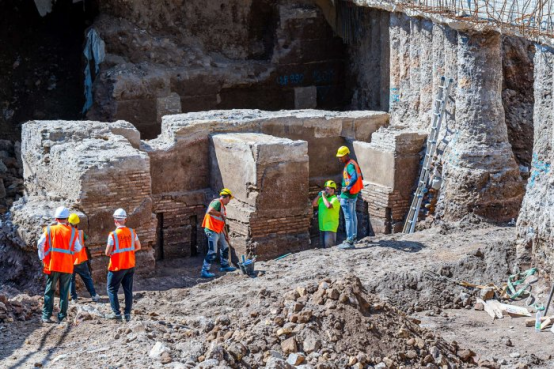
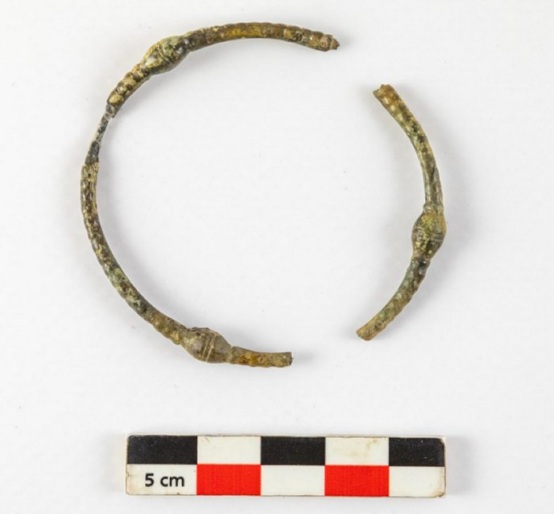
While the swords naturally capture the imagination, the cemetery yielded a vast array of everyday artifacts that provide a holistic view of Celtic life. Excavators recovered heavy gold “torcs” (rigid neck rings), intricate bronze fibulae (brooches used to fasten cloaks), and imported Mediterranean pottery. These items are crucial for understanding the economic and social fabric of the settlement.
The presence of imported pottery and glass beads proves that this specific Celtic tribe was not isolated. They were active participants in a sprawling, trans-continental trade network that stretched from the British Isles to the Mediterranean Sea. The gold torcs, specifically, were ultimate markers of nobility and divine favor, often worn into battle as a talisman of protection.
Technical Checklist: Artifact Extraction and Preservation
Extracting 2,000-year-old iron and bronze from the earth is a delicate operation. If exposed to oxygen and modern humidity levels too quickly, these priceless artifacts can disintegrate within days. Archaeologists follow a strict protocol:
- In-Situ Documentation: Photogrammetry and 3D laser scanning are used to record the exact position of the artifact before it is touched.
- Block Lifting: Fragile swords are not pulled directly from the dirt. Instead, the surrounding soil is cut out in a solid block, wrapped in plaster, and transported to a lab.
- Micro-Excavation: In a climate-controlled laboratory, conservators use dental tools and microscopes to slowly remove centuries of corrosion and soil.
- Desalination: Artifacts are soaked in specialized chemical baths to draw out destructive ground salts that cause iron to rust from the inside out.
- Consolidation: A reversible acrylic resin is applied to the metal to stabilize its structure and prevent future degradation.
Expert Advice: Interpreting Celtic Heritage
For history enthusiasts, students, and amateur archaeologists looking to understand the depth of Celtic discoveries, analyzing the context of a find is paramount. Professional archaeologists offer the following pro tips when interpreting such sites:
Pro Tip 1: Always look at the placement of the grave goods. A sword placed on the right side of the body versus the left can indicate the warrior’s dominant hand, or it may reflect a specific regional religious rite.
Pro Tip 2: Do not ignore the “mundane” items. While a gold torc is visually stunning, the microscopic analysis of pollen found inside a buried pottery jug can tell us exactly what season the funeral took place and what the local climate was like.
Pro Tip 3: Understand the “Ritual Killing” of weapons. You may notice that some swords found in Celtic graves are deliberately bent or broken. This was not due to battle damage. It was a deliberate ritual practice meant to “kill” the weapon, releasing its spirit so it could travel with its owner into the afterlife, while simultaneously ensuring grave robbers could not reuse the blade.
Frequently Asked Questions (FAQ)
- Who were the Celts?
- The Celts were a diverse group of tribal societies in Iron Age Europe. Rather than a single unified empire, they were connected by similar languages, religious beliefs, and artistic styles (such as the La Tène culture). They spanned from modern-day Ireland and the UK all the way to parts of Eastern Europe and Anatolia.
- Why did the Celts bury weapons with their dead?
- Celtic belief systems heavily featured an active afterlife that closely mirrored the mortal world. Weapons, jewelry, and food were buried with the dead so they would be fully equipped to maintain their social status, defend themselves, and feast in the next world.
- How do archaeologists date these ancient swords?
- Dating is achieved through a combination of methods. Typology (studying the stylistic evolution of the sword and scabbard designs) gives a relative date. Radiocarbon dating of organic materials found alongside the swords, such as wooden scabbard linings or bone handles, provides a precise absolute date.
- What is the significance of the swirling patterns on Celtic scabbards?
- The swirling, interlocking patterns characteristic of Celtic La Tène art are deeply symbolic. While the exact meanings are lost to time, historians believe these continuous, knot-like designs represented the interconnectedness of nature, the cycle of life and death, and the mystical forces that governed the world.
- Can the public view these newly discovered artifacts?
- Currently, the artifacts are undergoing rigorous conservation in a climate-controlled laboratory, a process that can take several years. Once stabilized and fully studied, they are typically transferred to national or regional archaeological museums for public exhibition and educational display.