Decoding the Origin of Stonehenge’s Altar Stone
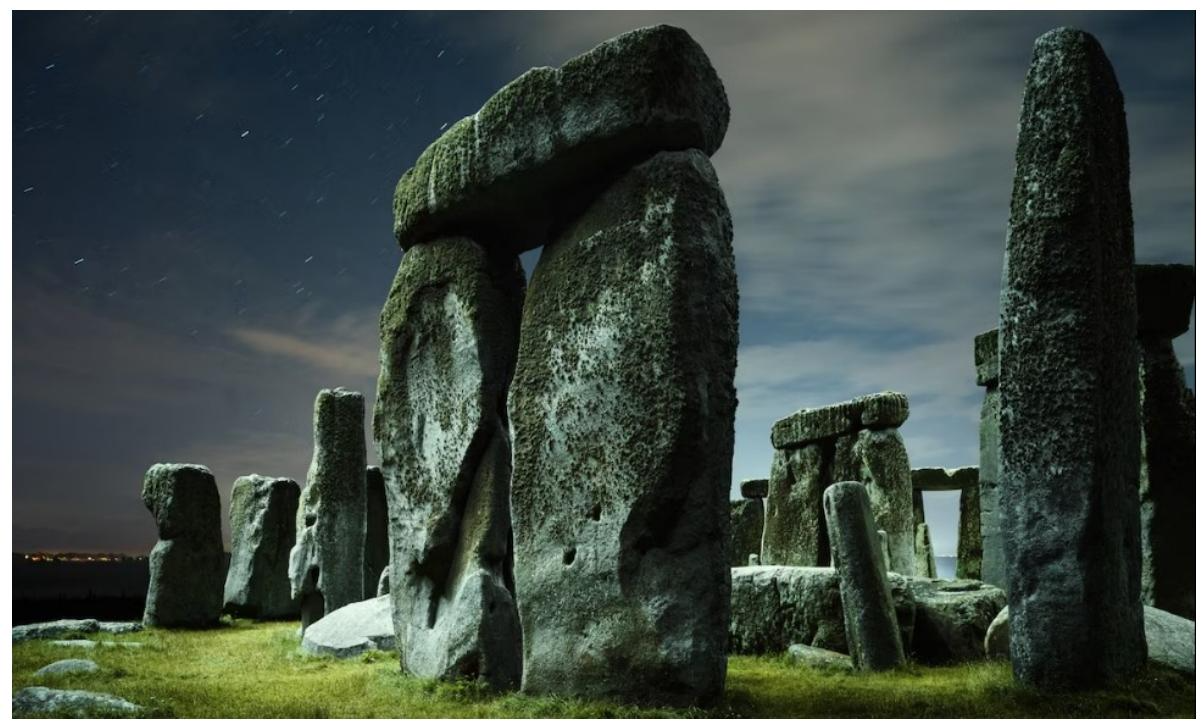
For centuries, the architectural and logistical marvel of Stonehenge has captivated historians, archaeologists, and the general public alike. While the origins of the sarsen stones and the smaller bluestones from Wales have been documented, the provenance of the central Altar Stone remained one of antiquity’s most enduring mysteries. Recent exhaustive geological surveys and advanced isotopic fingerprinting have finally pierced this veil, revealing a narrative of prehistoric mobility that shatters previous assumptions about Neolithic societal capabilities.
Geological Traces and the Scottish Connection
The breakthrough in identifying the Altar Stone’s origin stems from rigorous mineralogical analysis. By examining the unique age profile of the minerals embedded within the sandstone—specifically zircon, apatite, and rutile grains—researchers were able to create a highly specific geological fingerprint. This fingerprint was then cross-referenced with sedimentary basins across the United Kingdom and Europe.
The results were paradigm-shifting. The isotopic signature did not match the Welsh basins, as long hypothesized, but instead perfectly aligned with the Old Red Sandstone formations of the Orcadian Basin in northeast Scotland. This revelation means that this massive six-ton megalith was transported over 750 kilometers, a distance previously thought impossible for Neolithic communities to traverse with such a colossal burden.
- Isotopic Fingerprinting: Utilizing uranium-lead dating on zircon crystals to pinpoint the exact era of the rock’s formation.
- Mineralogical Matching: Comparing rutile and apatite compositions to rule out local southern British geology.
- The Orcadian Basin: Identifying the specific Scottish highland region that served as the quarry for this sacred centerpiece.
Understanding this geological connection forces a complete re-evaluation of Neolithic Britain. It suggests a highly interconnected society with shared belief systems and the capacity for immense, coordinated logistical operations across vast distances.
Transportation Methods: Land vs. Sea Routes
The discovery of the Scottish origin immediately spawned a secondary, equally perplexing question: how was a six-ton stone moved 750 kilometers during the Stone Age? The academic consensus is currently divided into two primary logistical theories, each presenting its own set of monumental challenges and implications for ancient engineering.
The overland route theory suggests a grueling, multi-generational journey utilizing wooden rollers, sledges, and a vast network of cooperating tribes. Conversely, the maritime route theory posits that the stone was loaded onto advanced Neolithic skin boats or lashed to massive wooden pontoons, navigating the treacherous coastal waters of the British Isles. Both theories highlight a level of societal organization, engineering acumen, and navigational skill that deeply enriches our understanding of prehistoric human potential.

The Nineveh Excavations: Ashurbanipal and Divine Reliefs
Shifting from the prehistoric plains of Britain to the cradle of civilization, the ancient city of Nineveh in modern-day Iraq continues to yield treasures of incomprehensible historical value. The recent unearthing of a memorial relief featuring the Neo-Assyrian King Ashurbanipal alongside divine figures represents a watershed moment in Mesopotamian archaeology. This discovery not only provides breathtaking artistic artifacts but also offers a profound window into the political and religious machinery of the Neo-Assyrian Empire.
Historical Context of the Neo-Assyrian Empire
King Ashurbanipal, who ruled from 668 to c. 627 BC, is renowned as one of the last great kings of Assyria. His reign was marked by unprecedented military expansion and the establishment of the great Library of Nineveh. The newly discovered reliefs were found within the palatial complexes that served as the administrative and ceremonial heart of his empire. These structures were designed to awe visiting dignitaries and subjugated leaders, projecting an image of absolute, unyielding power.
The meticulous excavation of these reliefs required navigating complex stratigraphy, often complicated by centuries of subsequent habitation and modern urban development. Archaeologists had to meticulously clear away debris to reveal the pristine, deeply carved alabaster panels that had lain hidden since the fall of Nineveh in 612 BC.
Iconography of Divine Figures and Royal Propaganda
The true value of the Ashurbanipal relief lies in its intricate iconography. Neo-Assyrian art was rarely purely decorative; it was a highly sophisticated form of state propaganda. The depiction of the king in the presence of divine figures—such as Ashur, the national god, or Ishtar, the goddess of war and love—was a deliberate visual strategy to legitimize his rule.
- Divine Endorsement: The physical proximity of the king to the gods in the carving signifies his role as the earthly conduit of divine will.
- Intricate Symbolism: The use of specific regalia, such as the horned headdress on the deities and the royal tiara on Ashurbanipal, establishes a strict visual hierarchy.
- Narrative Carving: The reliefs often feature cuneiform inscriptions that corroborate the visual narrative, detailing the king’s military victories and temple restorations.
By analyzing the subtle details of the carving—the musculature of the figures, the drape of the garments, and the specific weapons yielded—art historians can trace the evolution of Assyrian craftsmanship. These reliefs confirm that Ashurbanipal’s court attracted the finest artisans of the ancient world, tasked with immortalizing the king’s legacy in stone.

Technological Catalysts in Modern Archaeological Breakthroughs
The spectacular discoveries at both Stonehenge and Nineveh were not merely the result of a lucky swing of a pickaxe. They are the direct culmination of integrating cutting-edge technology with traditional archaeological methodologies. The modern archaeologist’s toolkit now resembles that of a forensic scientist, allowing for non-destructive analysis and data recovery on a microscopic scale.
Isotope Analysis and Mineralogy
As demonstrated in the Stonehenge Altar Stone discovery, mass spectrometry and X-ray fluorescence (XRF) have revolutionized provenance studies. By vaporizing microscopic samples of stone and analyzing the resulting elemental spectrum, scientists can determine the exact chemical composition of an artifact. This data is then matched against global geological databases, turning silent stones into eloquent testaments of ancient trade and migration routes.
Ground-Penetrating Radar and Laser Scanning
In Nineveh, the threat of modern encroachment and the sheer scale of the ancient city make traditional, blind excavation impossible. Archaeologists now rely heavily on Ground-Penetrating Radar (GPR) and LiDAR (Light Detection and Ranging). These technologies allow researchers to “see” beneath the soil, mapping out subterranean walls, streets, and palatial foundations without turning a single spade of earth.
Once artifacts like the Ashurbanipal reliefs are exposed, photogrammetry and 3D laser scanning are immediately employed. These tools create high-resolution digital twins of the artifacts in situ. This is crucial because the moment an ancient object is exposed to modern air, humidity, and light, the degradation process begins. Digital preservation ensures that even if the physical object deteriorates, its exact dimensions and intricate carvings are preserved for future study.

Comparative Analysis: Neolithic Britain vs. Neo-Assyrian Empire
While separated by thousands of years and miles, placing the monumental achievements of Neolithic Britain alongside those of the Neo-Assyrian Empire provides a fascinating comparative study in human ambition. Both societies utilized massive stone monuments to express profound cultural narratives, yet their methodologies and ultimate purposes diverged significantly.
Divergent Purposes in Monumental Architecture
Stonehenge represents a communal, likely spiritual endeavor. The movement of the Altar Stone was an act of collective devotion, aligning with celestial events and serving as a focal point for a widespread agrarian society. In stark contrast, the reliefs of Nineveh were the product of a highly stratified, autocratic empire. Their creation was driven by the ego and political necessity of a single ruler, designed to project terror, power, and divine right to a captive audience.
| Feature | Stonehenge (Altar Stone) | Nineveh (Ashurbanipal Reliefs) |
|---|---|---|
| Era | Neolithic (c. 2600 BC) | Neo-Assyrian (c. 650 BC) |
| Material | Old Red Sandstone | Gypsum Alabaster |
| Primary Purpose | Spiritual, Celestial Alignment | Political Propaganda, Royal Legacy |
| Transport Distance | Approx. 750 kilometers | Local Quarries (Tigris River Region) |
| Societal Structure | Egalitarian/Tribal Cooperative | Highly Stratified Autocracy |
This table illustrates the fundamental differences in how these ancient peoples interacted with their environment. The Neolithic Britons moved mountains over vast distances to build a shared spiritual center, whereas the Assyrians utilized local resources to carve incredibly detailed, narrative-driven monuments to individual glory.

Conservation Strategies for Newly Unearthed Artifacts
The thrill of discovery in archaeology is immediately followed by the sobering responsibility of conservation. Both the Altar Stone and the Nineveh reliefs face severe environmental and anthropogenic threats. Developing robust preservation strategies is as critical as the excavation itself, requiring international cooperation and significant funding.
Mitigating Environmental Degradation
For the reliefs in Nineveh, the primary threat is sudden environmental shift. Buried for millennia, the alabaster has reached a state of equilibrium with the surrounding soil. Exposure to fluctuating temperatures, acid rain, and wind-blown sand can cause the stone to laminate, crack, and lose its intricate surface details. Conservationists must quickly apply reversible consolidants to stabilize the stone and often construct protective shelters over the excavation sites to buffer against the harsh Iraqi climate.
Global Collaborative Efforts in Heritage Protection
The protection of these sites is no longer the sole purview of the host nation. Modern conservation is a global effort. International teams of chemists, structural engineers, and heritage managers collaborate to design bespoke preservation plans. Furthermore, the threat of looting and illicit antiquities trafficking—particularly prevalent in conflict zones like Iraq—necessitates strict physical security and the rapid digitization of artifacts to trace them should they be stolen.
- Site Stabilization: Utilizing micro-piling and structural shoring to prevent the collapse of ancient walls newly exposed to the elements.
- Chemical Consolidation: Applying specialized, breathable resins that bind the fragile stone matrix without altering its visual appearance.
- Community Engagement: Educating and employing local populations in the conservation process to foster a sense of ownership and organic protection of the heritage site.
Ultimately, the survival of these ancient marvels depends on a delicate balance between academic study, public exhibition, and rigorous, scientifically backed conservation methodologies. As we continue to uncover the secrets of our past, we must simultaneously commit to being the stewards of its future.
Frequently Asked Questions (FAQ)
- How did scientists determine the Stonehenge Altar Stone came from Scotland?
- Scientists utilized advanced isotopic fingerprinting, specifically uranium-lead dating of zircon crystals and the analysis of rutile and apatite grains within the stone. By comparing this unique mineralogical signature to sedimentary basins across Europe, they found a perfect match with the Old Red Sandstone formations in the Orcadian Basin of northeast Scotland.
- What is the significance of the Ashurbanipal reliefs found in Nineveh?
- These reliefs are crucial because they provide highly detailed visual evidence of Neo-Assyrian royal propaganda, religious beliefs, and court life. Depicting King Ashurbanipal alongside divine figures, the carvings were designed to legitimize his rule and project absolute power to both his subjects and foreign dignitaries.
- How were massive stones like the Altar Stone transported in Neolithic times?
- While the exact method remains a topic of debate, archaeologists propose two main theories: an overland route utilizing wooden sledges, rollers, and immense collective human labor, or a maritime route where the stone was transported along the coast using large Neolithic skin boats or wooden pontoons.
- What role does modern technology play in these archaeological discoveries?
- Modern technology is foundational to contemporary archaeology. Tools like Ground-Penetrating Radar (GPR) and LiDAR allow for non-invasive site mapping, while mass spectrometry and X-ray fluorescence enable precise material analysis. Additionally, 3D laser scanning is used to create digital twins of artifacts for preservation and remote study.
- Why is conservation a critical step immediately following an excavation?
- Artifacts buried for thousands of years reach a state of environmental equilibrium. Once excavated, they are suddenly exposed to light, oxygen, humidity fluctuations, and pollution, which can cause rapid deterioration. Immediate conservation steps, such as chemical stabilization and the construction of protective shelters, are essential to prevent the loss of these invaluable historical records.