When you think of pottery, you might think of the kitchen pot used for stewing soup or holding water.
But in North American Indian culture, pottery is more than just an everyday item; it’s a carrier of history, a kind of wisdom for life, and a journey through time that spans millennia.
The first encounter between soil and water
The story of North American Indian pottery begins with the earth.
Indigenous peoples didn’t have modern porcelain clay; they used the natural resources around them: river clay, gravel, and plant ash.
After collecting these, they first removed impurities, then added water and natural fibers and stirred them until the clay could be molded.
This step may seem simple, but it’s a testament to its ingenuity.
Different clays and the way they incorporate ingredients determine the pottery’s hardness, texture, and durability.
Some tribes even choose clay from different riverbeds to craft daily or ceremonial pottery, depending on the season and purpose.
Imagine ancient fingers gently sliding across the moist earth, shaping bowls, jars, and bottles. Each touch felt like a communion with the earth.
The birth of pottery is not just the creation of an object, but an art form of interaction between man and nature.
Transformation in the Fire
After being shaped, the pottery is still just a clay body.
The subsequent firing process is the real test of the craftsman’s skills.
Indigenous people would slowly bake the pottery outdoors or in a simple fire, using firewood or plant ash.
The flames licked the pottery, and the clay gradually hardened, its color changing from gray-brown to reddish red and then to dark brown, and the texture became clearer.
The firing process is extremely dangerous: if the temperature is not controlled correctly, the pottery may crack or deform.
But if it is successful, the pottery can withstand the wear and tear of daily use and even last for hundreds of years.
In this process, tribal women and artisans play a key role.
They are not only the makers of pottery, but also the designers of patterns and designs.
Some pottery is engraved with animal totems, star symbols, and tribal stories, each piece bearing a unique cultural imprint.
The code of civilization in patterns
North American Indian pottery is not only a living utensil, but also more like a book, recording the history, beliefs and aesthetics of the tribe.
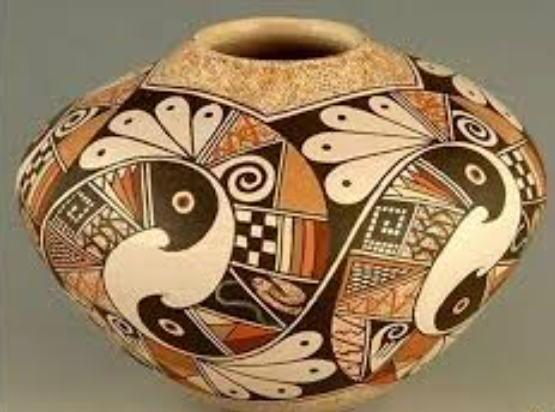
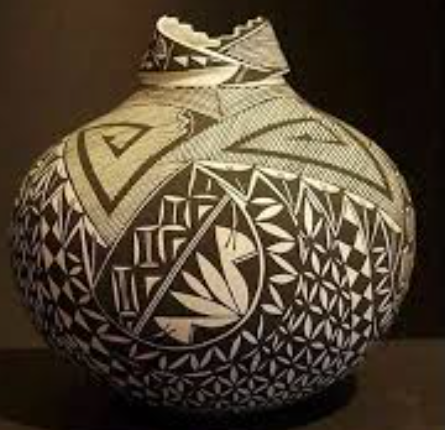
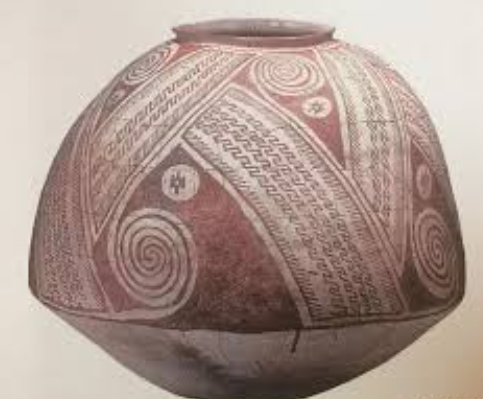
For example, Sioux and Hopi pottery often features geometric patterns and spiral designs, which are not only beautiful but also symbolize blessings.
The totems, animals, and natural symbols on pottery are microcosms of ethnic culture and can also mark tribal boundaries, social status, and even ritual purposes.
A close look at these patterns reveals the designer’s meticulous attention to detail: the thickness of the lines, the rhythm of the curves, all represent a dialogue with nature, life, and the spiritual world.
Each piece of pottery is a culmination of craftsmanship and culture, the embodiment of tribal wisdom.
From daily use to ritual: the multiple roles of pottery
In ancient times, pottery had diverse uses.
It served as cooking utensils, water storage jars, and even sacred vessels in religious ceremonies.
Some vessels were specifically designed to store grains and legumes, ensuring food security for the community.
Others were used in sacrifices and ceremonies, and even buried with their owners as burial objects, passing into the afterlife.
This functional diversity makes pottery not only a necessity of life, but also an important carrier of cultural heritage.
When we see these pottery pieces in museums today, we see not only clay and fire, but also scenes of life, religious rituals and social order from hundreds of years ago.
War and Migration: The Diaspora of Pottery
With the arrival of European colonists, the lives of Native Americans in North America changed dramatically.
War, disease, and migration scattered many tribes, and pottery was also dispersed.
Some pottery was brought to colonies as trade items, some was collected by private individuals, and some became the subject of archaeological research.
In the process of diaspora, these pottery not only preserved history but also carried the memory and identity of the ethnic group.
Today, when we see Indian pottery in the British Museum, the Metropolitan Museum of Art, or the Smithsonian Institution, it has made the leap from hearth to display case, becoming a cultural bridge across time and space.
New life in the museum
Modern museums not only display pottery but also tell the stories behind it.
Through text, images, and interactive exhibitions, visitors can understand the production process, uses, and cultural significance of pottery.
For example, some museums invite Aboriginal artisans to demonstrate the pottery-making process, allowing visitors to experience the charm of ancient craftsmanship.
This kind of interaction not only makes the pottery “come alive,” but also continues to extend cultural heritage.
Pottery is no longer just a static exhibit; it has become a bridge connecting the past and the present, craftsmen and audiences, and clay and civilization.
Modern inspiration: the value of handcraft and culture
The story of North American Indian pottery tells us that
handicraft is not only a skill, but also a reflection of culture, history and life wisdom.
In modern society, people may no longer rely on pottery to store food, but the spiritual value behind pottery is still worth learning:
Respect for natural materials
Patience and focus on craftsmanship
Inheritance of cultural symbols and history
Some modern ceramicists draw inspiration from Indian pottery, combining traditional patterns with modern designs to create works that are both beautiful and rich in cultural connotations.
It can be said that the time travel of ancient pottery continues in the modern era.
Summary : A Millennial Journey of Earth and Fire
From collecting soil from the river to firing in the furnace, from daily use in tribes to display cases in museums, North American Indian pottery has gone through a journey of thousands of years.
It is not just an artifact, but also a piece of civilization, a kind of life wisdom, and a cultural memory.
When we touch or gaze at these pottery, it is as if we are talking to the craftsmen of hundreds of years ago, feeling the warmth between the clay and the fire.
Pottery is constantly reborn amidst ruins, fire, diaspora, and display cases, just like Native American culture itself: amidst sorrow and displacement, it retains hope and resilience.
The next time you see a piece of ancient pottery, pause and imagine its journey from clay to fire, from life to exhibition.
It’s a journey through time, spanning millennia, and a gentle reminder of history.