Deep in the mountains and forests of Cambodia lies a stunning ancient architectural wonder: Angkor Wat. It is not only a symbol of Cambodian civilization, but also renowned worldwide for its exquisite stone reliefs. From the majestic temple walls to the meticulous details of the reliefs, Angkor Wat showcases the superb craftsmanship of ancient artisans and their profound cultural heritage. Today, we will explore the artistic charm and historical stories behind this thousand-year-old monument.
Historical and Architectural Background of Angkor Wat
Angkor Wat was built in the 12th century by the Khmer King Suryavarman II. It is a temple built to commemorate the Hindu god Vishnu. It is not only a religious sanctuary, but also a symbol of royal power:
The scale of the building is huge : Angkor Wat covers an area of approximately 162.6 hectares and consists of a central tower, surrounding corridors and multi-level platforms
The fusion of religion and politics : The design of the temple reflects the cosmic view, the central tower symbolizes Mount Xumi, and the surrounding reliefs show mythological stories.
A pinnacle of Khmer civilization : embodies the social, religious, and cultural power of the 12th-century Khmer Kingdom
These backgrounds provide rich themes for the stone carving art of Angkor Wat, and make every stone a cultural carrier.
Themes and Contents of the Reliefs
The stone reliefs at Angkor Wat have diverse themes and rich content:
Myths and Legends
Hindu epics such as the Ramayana and the Mahabharata are common in reliefs.
Depicting scenes where gods defeat demons and heroes save the world
religious ceremonies
Stone carvings record ancient sacrificial activities, worship rituals and the lives of priests
Reflects the Khmer people’s religious piety and social hierarchy
Kingship and daily life
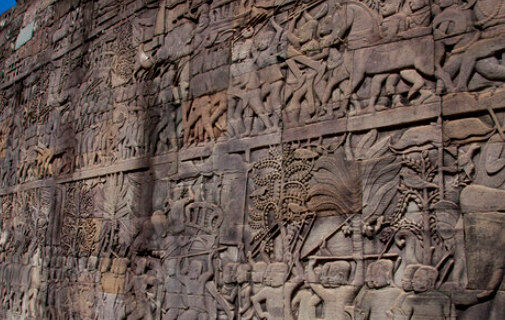
Depicting scenes of the king’s glory, court celebrations, and battles
Showcasing ancient cities, clothing, musical instruments, dance and other daily culture
Through these reliefs, we not only see mythological stories, but also feel the life of the Khmer people thousands of years ago.

Techniques and Artistic Characteristics
The stone carvings at Angkor Wat are truly remarkable, with countless details and the craftsmanship and artistic expression of the carvings are truly astonishing:
High relief : figures and deities protrude from the stone, with smooth lines and vivid expressions.
Decorative patterns : vines, lotus flowers, decorative belts, these details are carved very delicately, and it can be seen that the craftsmen have extremely high requirements for details.
Spatial layering : Through ups and downs and perspective effects, the whole picture looks three-dimensional and has a sense of movement.
Proportion and Human Aesthetics : The carved figures are well-proportioned and have natural poses, incorporating the aesthetics of classical Indian art.
These techniques not only demonstrate the craftsman’s superb skills, but also make the reliefs visually and emotionally powerful.
Cultural and Symbolic Significance of Stone Carvings
The stone carvings of Angkor Wat are not only works of art, but also carry rich cultural information:
Symbol of royal power : The king used reliefs to demonstrate his ruling authority and strengthen the concept of divine right of kingship
Religious beliefs : Stone carvings convey Hindu cosmology, deity worship, and moral teachings
Social and cultural records : Relief details reveal ancient clothing, architecture, and lifestyle, providing valuable information for historical research.
Cultural communication : Angkor rock carvings have influenced Southeast Asia and even the world’s classical sculpture art, and are a testament to cultural exchange.
In other words, the stone carvings of Angkor Wat are not only pleasing to the eye, but also allow people to understand the spiritual world of an ancient kingdom through the stone carvings.
Protection and Modern Value
As time passes and natural erosion occurs, the Angkor Wat carvings face conservation challenges:
Tropical rainforest climate causes stone weathering
Excessive trampling by tourists may damage the relief details
Natural disasters such as earthquakes and floods exacerbate the damage to stone carvings
Modern conservation efforts, including digital scanning, restoration projects, and the establishment of visitor management systems, ensure the preservation of this cultural heritage. At the same time, Angkor Wat has become a popular destination for cultural tourism, allowing more people to experience the charm of ancient art up close.
Summarize
The stone carvings of Angkor Wat are a vivid display of Cambodia’s ancient art and culture. From mythological stories to symbols of royal power, from exquisite craftsmanship to cultural significance, each stone carving is like a history book, allowing us to travel back through millennia and experience the wisdom and beauty of ancient civilization. Standing before these reliefs, one can almost hear the whispers of millennia-old history, reminding us to cherish and pass on these shared artistic treasures.