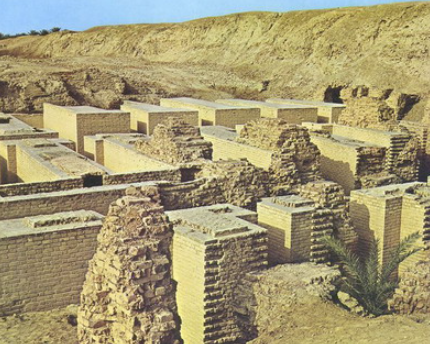
The Hanging Gardens of Babylon, one of the Seven Wonders of the Ancient World, has long intrigued historians, archaeologists, and the general public. Described as a green wonder suspended in the air, it featured elevated terraced gardens filled with a variety of exotic trees, vines, and fountains. But until now, the gardens’ existence has remained a mystery.
The Origin of the Legend of the Hanging Gardens
The legend of the Hanging Gardens of Babylon is primarily based on accounts by ancient Greek historians such as Herodotus and Strabo, who described the gardens as awe-inspiring:
Built on multiple platforms, each floor is planted with trees and flowers
Using a complex irrigation system to allow plants to grow in mid-air
It is believed to have been built by King Nebuchadnezzar II of the Neo-Babylonian Empire for his wife, who missed the mountains and forests of her hometown.
According to legend, the garden was not only a symbol of beauty, but also a display of ancient Babylonian engineering and architectural capabilities.
Historical Background and Babylonian Civilization
Babylon, located in present-day Iraq, was one of the core cities of ancient Mesopotamian civilization. In the 6th century BC, the Neo-Babylonian Empire reached its peak:
During the reign of Nebuchadnezzar II (605–562 BC), Babylon underwent extensive construction.
The city has majestic walls, magnificent temples, canals and palaces
The Hanging Gardens were considered part of these magnificent projects, symbolizing royal power and wealth.
These historical backgrounds show that the Hanging Gardens are not only a romantic legend, but may also reflect the high level of development of architecture and gardening at that time.
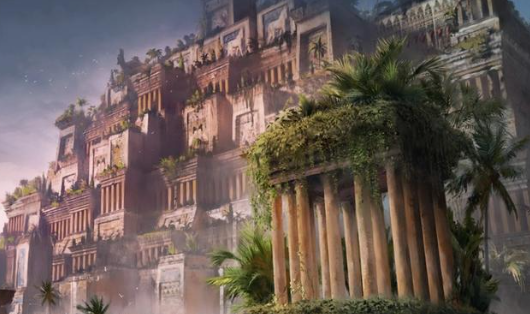
Construction and irrigation technology of hanging gardens
Ancient records show that the Hanging Gardens employed amazing architectural and irrigation methods:
Multi-layer stepped structure
Gardens are built on raised platforms or terraces, with each layer supporting plants and soil
The platform is built of bricks and stones, which is both load-bearing and waterproof
irrigation system
Use sprockets, water pumps or screw lifting devices to lift seedlings and water to the upper level
Maintain a favorable growth environment for plants, allowing them to thrive even in dry seasons
Plant Selection
Coconut trees, date palms, vanilla, and vines are said to have been planted
Consider both ornamental and practical uses, such as providing shade and fragrance
These technical details show that ancient Babylonian engineers may have mastered complex water conservancy and construction knowledge.
Archaeological Exploration and Controversy
Despite the fame of the Hanging Gardens, no definitive archaeological evidence has yet been found to prove their existence. Excavations at the Babylonian site have revealed palaces and city walls, but no clear remains of stepped gardens.
Some scholars suggest that the gardens may be a legend, or that they may have originally been located in Babylon but were actually located in Nineveh, the Assyrian capital. Others suggest that ancient textual descriptions, largely based on oral tradition, may have exaggerated the scale and beauty of the buildings and gardens.
Therefore, the Hanging Gardens are more like a cultural symbol – the aesthetics and romantic imagination of ancient Babylonian civilization.
Cultural Influence and Modern Significance
Regardless of whether the Hanging Gardens really existed, it had a profound impact on later generations:
Art and literature : Inspired the creative imagery of hanging gardens in paintings, novels, and films
Gardening and architectural design : The concept of modern vertical gardens and rooftop gardens can be traced back to the idea of ancient hanging gardens
Symbol of civilization : represents mankind’s yearning for the combination of natural beauty and engineering technology
When modern people visit Iraq or related museums, the story of the Hanging Gardens still inspires curiosity and awe about ancient civilizations.
Summarize
The Hanging Gardens of Babylon are a magical place where history and legend blend together. From ancient Greek records to current archaeological excavations, they represent beauty, technology, and romance.
Although we can’t be completely sure what it looked like, the Hanging Gardens still makes us realize that the ancient people’s wisdom in engineering, gardening and culture is actually much greater than we imagined. It is not just a garden, but a bridge connecting the imagination and civilization of ancient and modern times.